Wednesday, 20 October 2021

The Squid Game - A message for educators

''Squid Game'' is a rage with more than 130 million having watched it and personally, when I began watching it, within two days I completed all episodes. While I was watching, my husband joined me in and could not fathom how something so cruel had me hooked. Agreed the concept is novel, the direction is excellent and the characters touch you with their outstanding acting but it is DARK. 


Source: https://miro.medium.com/max/1200/1*0DQ2QlkHZe4ycAkYNJoc6A.jpeg

For starters, 456 players are given game cards and expected to play games related to childhood days where either you win or get eliminated [shot dead]. For every player lost, the winning money increases and the winner takes back 45.6 billion approx. $38.6 million. These players are poor and struggling to sustain themselves in society. Every episode the plot keeps changing and you cannot predict the next episode. This uncertainty had me going all the time, I kept feeling that people creating a game so inhuman, so torturous had to be caught. There had to be a consequence for wrongdoers but it never came. Instead, the lessons were different. So, let's begin:

1. We created the game for fun - When the protagonist, Seong Gi-hun asks the creator of the game the reason for creating this game, the response was ''WE WANTED FUN". People with money have nothing exciting them and this GAME thrilled them. The definition of the word, ''FUN'' has definitely metamorphized and the impact it will have on future generations is critical. Today they feel the game is fair and all participants knew what was in store for them when they returned so the end justifies the means. I ask you, 'DOES IT?'

Lesson: Do discuss this game and hear student's perspectives. The ''5 why'' approach will take you to their root thinking. 

2. JOIN me - Police Officer, Hwang Jun-ho is frantically looking for his brother, enters the island, and discovers that the frontman leading the games is his brother, Hwang In-ho who was also the winner in 2015. The frontman asks Hwang Jun-ho to join him and when he refuses, he is shot by his own brother. So, how are we defining relationships today? Is money the be-all and end-all? 

Lesson: Analyze Hwang In ho's character in class and the possible outcomes of his actions. 

3.A fair world  -The game has been running for over 30 years and no one ever asked where the people disappeared. The participants did hail from poor families, having huge debt but is the world so happy to be disposed of them. They knew what was in store for them but still went back. Why did the participants lose HOPE? Why did their family not approach higher authorities?  Are human lives so disposable? Let's introspect and ask ''How fair are we''?

Lesson: surround yourself with people who love you and will question your absence. Get students to invest in relationships. Create empathy backed curriculum. 

4. Stick to the Team - Participants are asked to make teams of 10 not knowing it is 'Tug of war'' game. Seong Gi-hun's team is weak and the opposite team is strong. If the team is pulled over, they fall from the raised platforms and die. Oh Il-nam, an elderly man with a brain tumor who prefers playing the Game as opposed to waiting to die in the outside world shares the strategies for winning this game and asks the players to work as a team. Reluctant initially, the protagonist believes in himself and has others believe in him too. They win and save their lives. 

Lesson - No matter what the game, only team work reigns supreme. Every player is important so capitalize on his or her strengths. In school, create activities that promote collaboration and communication. The 'WE'' is more important than the ''I''. 

5. You are my gganbu (trusted friend). - The players are to form teams of two and then asked to play a game of marbles where one competes with another. Suddenly, partners even couples try to outmaneuver the partner or sacrifice for one another. You see the worst coming out and in some the best. In life, when you are standing at a precipice, your true colours manifest. 

Lesson: Create situations in class where the masks fall and identities emerge. Ensure that there will be no judgements but follow up with consistent discussions and counselling so that students always choose the right path. 

In the end, the protagonist is leaving for the United States to meet his daughter and notices the same game card moving around. He wonders who is running the games as the creator dies after his interaction with him. He feels responsible that no more lives should be lost for a game and returns back. This ending gives me hope for humanity. 

My final takeaway is that such serials for entertainment purposes are fine but if real life imitates reel life then the consequences could be detrimental. We have to help the students differentiate between the two and recognize the possible outcomes. 

आकिञ्चन्ये न मोक्षोऽस्ति किञ्चन्ये नास्ति बन्धनम्।
किञ्चन्ये चेतरे चैव जन्तुर्ज्ञानेन मुच्यते॥

English Translation:

There is no redemption in poverty and no binding in prosperity.
Whether there is poverty or prosperity, an individual gets liberation by conscience.​


Wednesday, 18 August 2021

Gamification in Education - A robust shift

Do you recall the days we played outside like no man's business? I distinctly remember playing hopscotch, saakli, hide and seek, card games, and so on. We eagerly waited for school to end and rushed to the grounds, where our friends would be waiting. On reflection, I now realize the impact it had on my personality over time. It made me a social person and a team player and gave me the courage to lose over and over again but never give up. 


Source: https://media.wired.com/photos/5b4448e6440082328b06d0a3/16:9/w_2400,h_1350,c_limit/HopscotchTA-646407340.jpg

Today, with the prevalence of technology in our lives, physical games have become less important. However, how can we integrate gaming into our classrooms to instill the ideal combination of knowledge, attitude, and values in our students?

Well, gamification is the answer. Gamification in education incorporates game design elements such as point scoring, peer competition, teamwork, and scoreboards in classroom environments to increase students' engagement and motivation. For example, if you are teaching addition to primary students, the teacher uses a physical deck of cards and has students randomly select any three cards in a row to add up to 10. She supports learning by having students log on to a virtual gaming platform, where they play with a deck of cards to create sets of ten, and, upon completion of the activity, they are rewarded with stars or applause. 

If you wonder why gamification is in classrooms, then gamification is learning with fun and increases engagement among the students, as all children naturally love to play. It allows students to play at their own level, thus avoiding judgment and criticism, and it builds confidence within the student. It allows students to move to higher levels on completion of lower levels and thus supports scaffolding and deepens understanding of the concept. 


Source: https://i.pinimg.com/originals/c6/bb/12/c6bb124f3221495fefaa0aeb53714065.png

When students' will and skill are enhanced, learning outcomes surpass the learning objectives, leading to a more profound and lasting understanding of the material. When a classroom teaching-learning environment uses hands-on learning, whether physical or virtual, the learning will be lifelong. Moreover, students connect concepts to daily life situations. Ex: We still remember playing Queen of Sheba to date; a simple game used to create varied groups of say 3 or 5 people in a class of 40 students can help students understand the concept of division and the relationship between dividends, divisors, quotients, and remainders. 


It is more pertinent today, given that we are all sailing on an online platform with no physical access to our students. Gamification in e-learning allows us a glimpse into our students' conceptual understanding and their emotional and mental health. Every teacher has access to the gaming platform used by students in school and can see where each child is struggling or very comfortable, allowing them to take measures to support new learning accordingly. 
It also gives us a glimpse of mental and emotional health through engagement and attitude. Certain games require teamwork and collaboration, and when the child refuses to play, it is a red signal that something is wrong. The teacher immediately attends to it to resolve the concerns. 


Source: https://encrypted-tbn0.gstatic.com/images?q=tbn:ANd9GcRtLH6wjHzEgLblfRMZZV5CmZy9oREdOI9LMQ&usqp=CAU

Implementing gamification could present challenges, particularly due to the vast curriculum offered by boards, which leaves teachers with less time and is a significant concern. Also, Indian classrooms have huge student strengths, so space for physical games can be a challenge. Here, e-games can support, but access to technology in every home remains a question mark. This challenge can become an opportunity for teachers to develop a growth mindset and an attitude of adaptive thinking. Moreover, creative, innovative teachers who care and love their students have always created that path, fostering an environment where gamification can thrive and enhance student engagement and learning outcomes. 

Gamification is already here, and both teachers and students who have access to it are embracing it positively. The new NEP speaks of a digital India with e-learning platforms like Diksha and Swayam to be extended, more virtual labs to be increased, and more teacher training on online learning. We can see the boards supporting gamification in education and using it as a tool to assess students' conceptual learning. According to Verified Market Research, the Global Gamification in Education Market was valued at USD 444.1 million in 2018 and is projected to reach USD 3,959.4 million by 2026, growing at a CAGR of 31.29% from 2019 to 2026. We are going to see a robust shift towards digital learning in the future, so why not champion it immediately? 

Friday, 16 July 2021

Types of Blended Learning

The COVID pandemic has spiralled and fast forwarded us to a digital world making the impossible possible. 

Rewind to the pre-pandemic 2019 Teachers Perspectives Survey 23/01/2019; Education & Training Foundation:

''Teachers are very open to the benefits that technology can provide and accept that it can make their jobs easier. However, teachers say they need more support using technology. 59% say that both themselves and students equally need more training, and this should come from external bodies, as well as other teachers''.

Come 2021, everyone from students to parents to teachers are all techno savvy, perusing varied platforms to achieve proficient digital skills. The 59% has definitely moved on to a larger percentage. 

As per Microsoft blog on Jun 30,2020 by Brad Smith, the lockdown will accelerate digitization. 

At present, most schools are functioning online but when schools do reopen physically, what is the new system going to look like?

You guessed it right, it is blended learning. It is an approach that combines face to face learning with online learning incorporating certain elements that support students to have control over pace, time and place. 

One might ask, is it similar to what we have been practicing during the pandemic? Well, the response is YES and NO. Let me share the varied types and you could study it to understand where your current strategy fits in. 

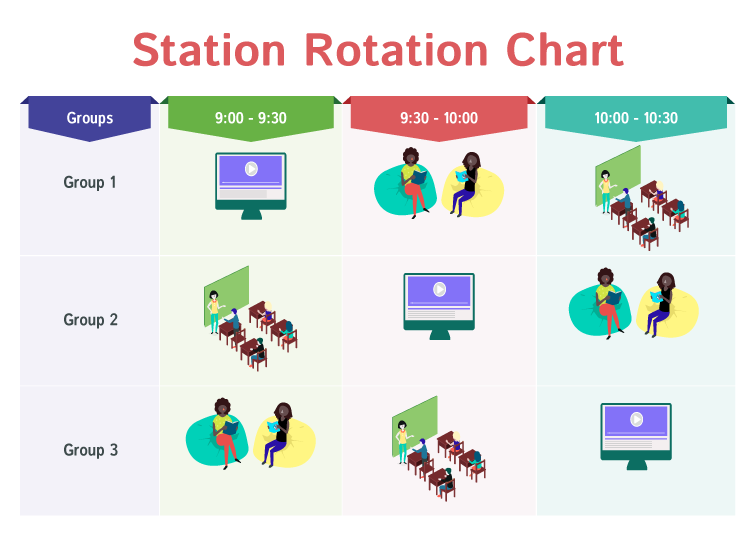
1.  Station Rotation Blended Learning - A rotation-model implementation where students rotate on a fixed schedule or at the teacher’s discretion among classroom-based learning modalities. This process often supports a school when there are few computers at hand within the classroom. 


Ex: In a class of 40 students, teacher teaching Algebra, teacher introduces the concept in a teacher led instruction. She then divides the group in three, where one group accesses the concept deeper through an online medium. It could be an online video or task or research. The second group works collaboratively in groups to discuss the concept or solve numerical. The third group works with the teacher either for more support or to move on to more challenging tasks and get more personalized attention.  


2. Lab Rotation Blended Learning - It is similar to Station Rotation. The only difference is that instead of doing online sessions within the classroom, the students visit the Computer lab. This helps to give more space within the classroom to students. 

Ex: Teacher teaches photosynthesis and conducts a quiz to check student's understanding. Students who demonstrate proficiency move to the lab for further independent practice like Q& A's, project work, experiments etc. Students who could not grasp the concept work with the teacher for more support. 


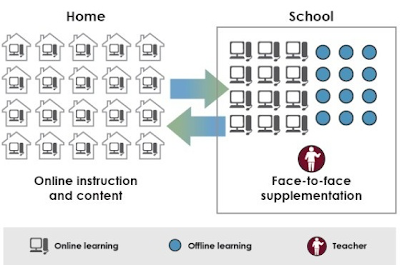
3. Remote or Enriched Virtual Blended learning - A course where students have fixed face to face sessions with the teacher and the remaining coursework or project, they complete remotely. 

Ex: Many Ph.D. courses have mandatory 1 month face to face courses with the guide and the remaining work is done by the researcher at his or her own pace independently of the guide. 


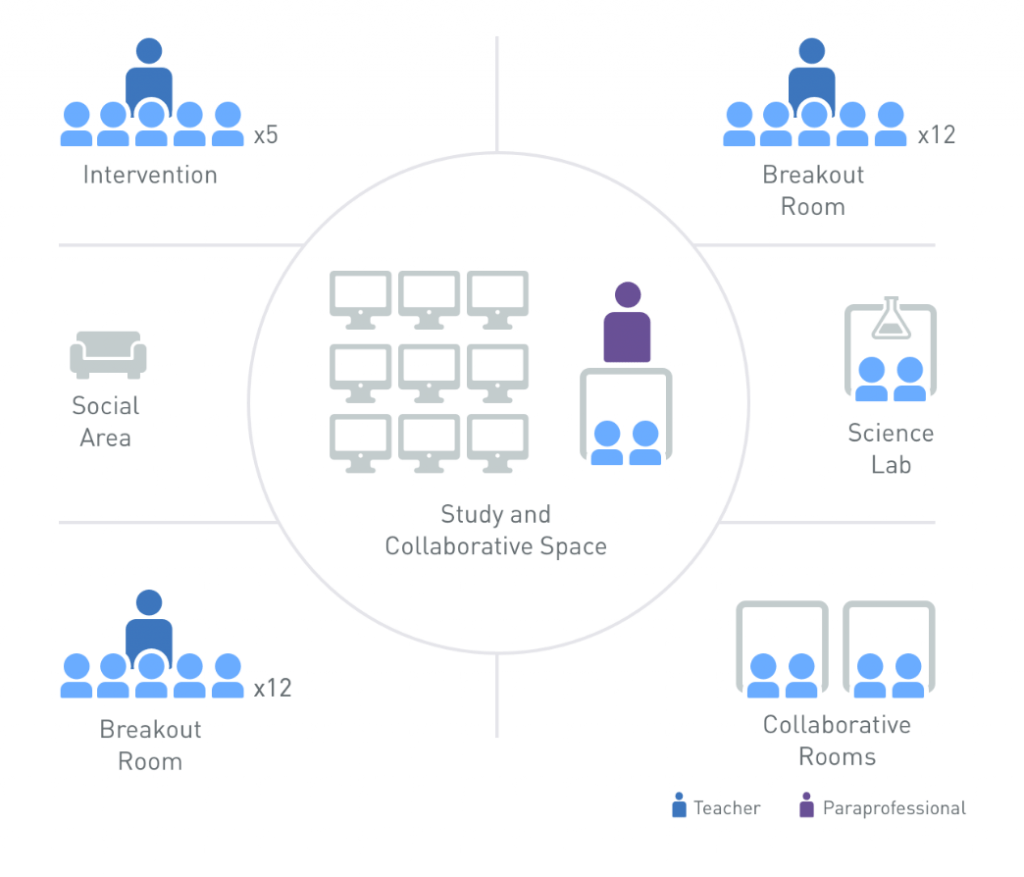
4. Flex Blended Learning - Imagine a school where classrooms have no fixed schedules. Both teacher and student attend school with every student in the classroom having access to a computer. All the teaching is delivered through the computer and students completes the task for the day and leaves school as per his schedule. If you are wondering how, watch the video shared in the link. School using Flex Model


5. Flipped Classroom - In this model, students are introduced to content at home and then they practice it within the classroom structure. Ex: Teacher shares videos and content matter on Egyptian civilization town planning with students prior to the lesson and asks them to peruse through it. The students go through the content at home and in the classroom, they engage in deep discussions and debates with peers and teacher. 


6. Individual Rotation Blended Learning - Allows students to rotate through different kinds of classrooms called stations. A specific ILP [Individual learning plan] is created for each student. 

Ex: Maya takes a English physical class at 8 am. She works on her assignments at an online platform from home. In the evening she books a ZOOM tutorial for further guidance. She seeks appointment for her classes through a tracking process that monitors attendance and engagement. More information on the link. Individual Rotation

7. Project -based learning - Students use online learning [courses/webinars/virtual trips/apps] along with face to face instruction or activity to collaborate and execute projects. They create and publish their work as printed or e-books, assignments, artifact or posters. Ex of classroom practice Project based Blended Learning practice


8. Inside - out and Outside -In Blended Learning [Link]- In Inside-out, learning begins in classroom and ends up beyond the physical classroom 

Ex: Teacher teaches students about domestic and wild animals in class and ends the lesson with a movie on animals seen by students at home. They move between digital and physical environments

In Outside -In, Students begin their learning in a digital environment and end the lesson in a physical environment. 

Ex: Students watch the movie on Domestic and Wild Animals' at home and in class, in the presence of the teacher they have discussions and solve worksheets. 

There are thousands of combinations where the ratio of physical to digital environment is varied as per the content objectives, resources, needs, age, control desired by the student. Moreover, they all have overlapping features catering to specific audiences. The end goal for every system is to cater to the learning needs of the individual and offer a platform where the knowledge, skills and attitudes thrive and amplify. 

Note: I personally wish to express gratitude to the SamUrja Team, Ms. Mukta Mishra, and Dr. Ashok Pandey for inspiring me to write on this theme. 


References:

1. Microsoft launches initiative to help 25 million people worldwide acquire the digital skills needed in a COVID-19 economy, Jun 30,2020 by Brad Smith - President. https://blogs.microsoft.com/blog/2020/06/30/microsoft-launches-initiative-to-help-25-million-people-worldwide-acquire-the-digital-skills-needed-in-a-covid-19-economy/

2. 12 Of The Most Common Types Of Blended Learning by TeachThought Staff, https://www.teachthought.com/learning/12-types-of-blended-learning/

3. The Rotation Model - https://www.readinghorizons.com/literacy-articles/blended-reading-approach/models/rotation-model


Sunday, 18 April 2021

Embed Assessment for Learning to develop equity in education

 The pandemic seems to be hitting us back and forth leaving no room for surprise. Once again all Board exams seem to be deferred or canceled leaving us with the option of falling back on our year-round online assessments. I am confident every school did their task of assessing students for knowledge, skills, and aptitudes but will we be successful in giving a fair report. Let's ask ourselves these questions.

  • Are our teachers trained for AFL? 
  • Are they equipped with the necessary digital tools and expertise to roll it out to our students? 
  • Are our students digitally savvy and have access to digital tools? 

The recent Teacher Tech Summit held on 17th April 2021,'Teachers will lead the digital learning revolution in schools' truly gave a glimpse on varied AFL strategies which we can seamlessly incorporate into our classrooms. 

So, let me begin with the meaning and need for AFL. 

As per CAIE, Assessment for learning (AfL) is an approach, integrated into teaching and learning, which creates feedback for students and teachers in order to improve learning and guide their next steps.


So let us visit understand how AFL can be incorporated within the curriculum:

1. Using a range of tools - Most of us are savvy with Google forms, MS Forms, Kahoot. Let me show a few more. 

a. Quizlet - A tool where you create learning material for your students and then they can refer to it at their own convenience and keep assessing themselves till they have mastered the concept. All you need is to create your study set ingeniously so that there is an application to real life too. The video shared by me will guide you on how I created a simple set of terms in the chapter, 'Motion in one dimension' for students to understand to move on to more challenging terms. 

https://drive.google.com/file/d/1PZdyeGKd5ZHWwrugWdunR_cRYXGMXIl1/view?usp=sharing

Students learn at their own pace and build their confidence on conceptual terms. 

b. Plio - Convert any YouTube video into an interactive lesson plan (a plio) by overlaying questions at specific timestamps in a few minutes and simply replace the YouTube link with a link to the Plio https://plio.in/. Let me show you how we can use it in the classroom. https://drive.google.com/file/d/1Jcb2NINszqvq6Cl4Aqen5CBmdblBdafb/view?usp=sharing

c. Multimedia platforms for role play, journaling, audio recording like Audacity, Mote [https://www.justmote.me/] which allows one to share stories, podcasts and receive feedback. Loom also helps groups to create quick online videos with PowerPoint presentations or videos. 

2. Move to more open book, challenging application-based questions where students cannot find direct answers on the net or textbook. This will promote deep thinking, collaborative and research work and support building 21st-century skills. 

Instructions: You need to work in groups of 4 where one is the group leader, one is the researcher, one is material manager and one is the technologist. The rubric is attached for further directions. 

Ex: We need to build a colony on Mars for 10000 people. We need to carry people from here. Design a spacecraft for their travel arrangements and guide them on travel protocols.  How will you create living conditions for them on Mars so that they have access to good food, safe homes and social entertainment? You will receive the link to necessary resources and materials. 

3. Make AFL your primary assessment tool - Assessment drives learning but the critical question is 'What type of assessment? If we ask rote-based questions, we will design our lesson plans where students are expected to remember, understand apply. If we expect students to demonstrate their own agency and independence through research projects, case studies, multimedia media presentations then it gets incorporated within the lesson plans. 

Dylan William's five brilliant formative assessment is an excellent guide: 


The teacher has to share the learning intentions, be able to engineer the learning activity to elicit evidence of learning, and provide feedback that helps learners to move forward. 

If everybody has high levels of shared understanding of learning intentions then peers can be great supports for each other. For ex: you conduct an individual math test for the student and have them do a similar test with 2 or 3 peers where they become learning resources for each other and this collaboration becomes dynamic learning leading students to become owners of their own learning. 

Last year we were new to the pandemic but this year, we know the way forward so why not embrace AFL and move away with the dogmatic mark-driven assessments. I agree the road ahead to embed AFL will be challenging as it demands a radical mind-shift on part of the parents, teachers, management and authorities but eventually celebrates our student's uniqueness and potentials and that outweighs all roadblocks. 


References:

1. https://teacherhead.com/2019/01/10/revisiting-dylan-wiliams-five-brilliant-formative-assessment-strategies/

2. Assessment for learning: what, why, and how? - https://www.youtube.com/watch?v=eMX5nfogEYE&t=1833s

3. The Teacher Tech Summit: Teachers will lead the digital learning revolution in schools - https://www.youtube.com/watch?v=myt2poF_7dg&t=10588s


Saturday, 30 January 2021

Adopt adaptive thinking

The vaccination across the world is in full swing ensuring that the pandemic is no more looming over us.  Look around you and observe the people, what has made them survive this long bleak period? What made people change their business overnight? What made people do chores they never attempted before? What made technology so accessible and augmented overnight? What made people embrace skills they never had in a short span? 


Well, all those who endured the pandemic showed one common attribute,' Adaptive thinking'. 
According to psychologist and expertise researcher Anders Ericsson, Adaptive Thinking involves the ability to “recognize unexpected situations, quickly consider various possible responses, and decide on the best one.”
This attribute was showcased by every member irrespective of age, gender, caste, or creed.

 Jeff Boss mentions that there are three main characteristics of adaptive thinkers. 

1.     Adaptive Thinkers Show Impulse Control - Do you remember our parents not giving in to our demands and making us wait. Well, it brought in resilience within us. The Marshmallow test stands testimony. https://jamesclear.com/delayed-gratification.

2.   Adaptive thinkers leave ego at the door - One needs to unlearn to relearn and that can only happen when one embraces humility. 

3.   Adaptive thinkers are curious - Curiosity makes one question, conduct problem-solving exercise which yields results. 


So, the prevalent question is, ‘How does one build this most crucial skill in students within the school and home?

The Harvard Business Review Article, ‘Five principles to Guide Adaptive leadership’ mentions the four A’s:

v    Anticipation of likely future needs, trends and options.

v    Articulation of these needs to build collective understanding and support for action.

v    Adaptation so that there is continuous learning and the adjustment of responses as necessary.

v    Accountability, including maximum transparency in decision making processes and openness to challenges and feedback.

Modifying these principles in schools, it can be expressed that we need to design a robust curriculum which anticipates future needs and trends and that is possible only when school’s liaison with Industries through internships and Industry-teacher mentorships and reviews the latest research and developments. It regularly invests in the training of teachers and Heads to support implementation of vocational subjects, activities, events which help students hone skills and attributes. It articulates the curriculum to varied stakeholders like Management, parents, students, and experienced educators to garner constructive criticism and support. It continuously adapts its curriculum to suit the needs of the society and students as per needs and expectations and finally holds itself accountable to streamline the vision and mission of the school to achieve the goals.

At home, the parents need to follow the 3R’s in their day to day interaction with their child

1.     Restrain

2.   Resilience

3.   Reflect

Restrain – Love your child but know when to give in and when to restrain. Instant gratification is not the solution but instant ‘NO’ can help.

Resilience – Very often our love for them makes us fight all their obstacles and challenges and in return weakens them. Let them fall and offer your hand to them to get up. Let their journey be their OWN.

Reflect – Allow the children moments to realize the implications of their actions whether positive or negative at the end of the day and categorize them. Help them work on converting the pain into a learning experience for it will build within them empathy and mutual respect.  

As Yann Martel, Life of Pi says “All living things contain a measure of madness that moves them in strange, sometimes inexplicable ways. This madness can be saving; it is part and parcel of the ability to adapt. Without it, no species would survive.”

Together, we develop a positive mindset, adapt and overcome. 


Thanks and gratitude to Ms. Sita Murthy and IPN as the talks inspired me to write on the topic. 

References:

1.     Jeff Boss, Three characteristics of Adaptive leaders, Forbes, Jul 1, 2015,07:15am EDT, https://www.forbes.com/sites/jeffboss/2015/07/01/3-characteristics-of-adaptive-thinkers/?sh=721f4f0de179

2.     Ben Ramalingam, David Nabarro, Arkebe Oqubay, Dame Ruth Carnall, and Leni Wild, 5 Principles to Guide Adaptive Leadership, Harvard Business Review, September 11, 2020, https://hbr.org/2020/09/5-principles-to-guide-adaptive-leadership


Wednesday, 13 January 2021

I feel, you feel - A short story

 Priya was annoyed. She paced her living room the 50th time. Varun was supposed to be home on time after all it was their 15th wedding anniversary. It was a precious moment for them. She had been calling him but the phone was unreachable. So, where was he?

Around 11:30 pm, Varun walked in looking very happy. He had struck a huge deal and he couldn't wait to share it with Priya. His business was truly going great. As he began to talk, Priya pounced on him with harsh words and they had a huge fight. Each moved on to separate rooms extremely disillusioned. The next day, the household was silent, they spoke when required, moved about their tasks as if the previous day's fight had never happened. 

 Priya couldn't understand the human mind. It had processed that the people around her had limitations where the display of affection is concerned and still it lingered for more. It had countlessly over the years seen that birthdays and anniversaries didn't matter and it still expected. It refuses to come to terms that not everyone is sensitive or emotional and keeps begging for more and when it experiences detachment, it shatters and breaks down. 

She wanted to know how one explains to the self that it is pointless to walk in the direction where people have a varied definition of love not synchronizing with yours? How does one tell themself that only you will be burning in that fire and that the pain is not going to affect anyone else? How does one get control of their emotions when one is ready with a tear to shed on the slightest of actions? Why is it that nothing brings down the pain? 

She wishes for detachment, wishes for a stronger heart praying that she learn not to expect especially from the closest and dearest. She feels like a fool who knows that the others are not to blame but just herself. They are the way they are, so why be affected. Yet, ye dil maange more. So yes, few more days of torture and unhappiness because all this has been invited by her and her alone. 

Varun tapped his fingers restlessly on the keyboard not able to concentrate on the task in front of him. What had he done so wrong? There was a huge business opportunity and lots of money to be made. The deal going successful would only give him more occasions to pamper the family. He loved them and wished to see them happy. Every day for him was a marriage anniversary so why did Priya want only one day to be made special. If they couldn't celebrate it that day, they could on another day. There was an entire life ahead of them. She was making too much noise for one particular day and she had to understand that. Let her sulk and come to terms with herself. 

A few days later, life continued as normal. They appeared as a happy couple to all but were they really?


Thursday, 10 December 2020

Spatial Computing and its impact on Education

 Imagine a classroom where all physical resources have been digitally cataloged, all the sensors and devices have been connected to the Internet of Things and the digital map of the classroom has been merged with the object map. So, when the teacher carries her laptop to class, the lights come on automatically, the teacher's chair recognizes her and moves to accommodate her. The Interactive board switches on to her last lesson. The class mike becomes operational. The students entering class after attending a sports class having a digital wristwatch comfortably move to their seating area with any obstacle on their way like bag automatically moving away and the air conditioners adjust its cooling to suit the students present body temperature. Further, any student falling or having a mishap in the classroom, an alarm is sounded and the school nurse automatically arrives for support. 

Well, is this for real? Yes, this is 'SPATIAL COMPUTING" and is the next step in the convergence of physical and digital worlds. In the Top 10 emerging technologies of 2020 shared by the World Economic Forum [https://www.weforum.org/reports/top-10-emerging-technologies-2020 ], spatial computing has a major role to play in Industry redefining itself.


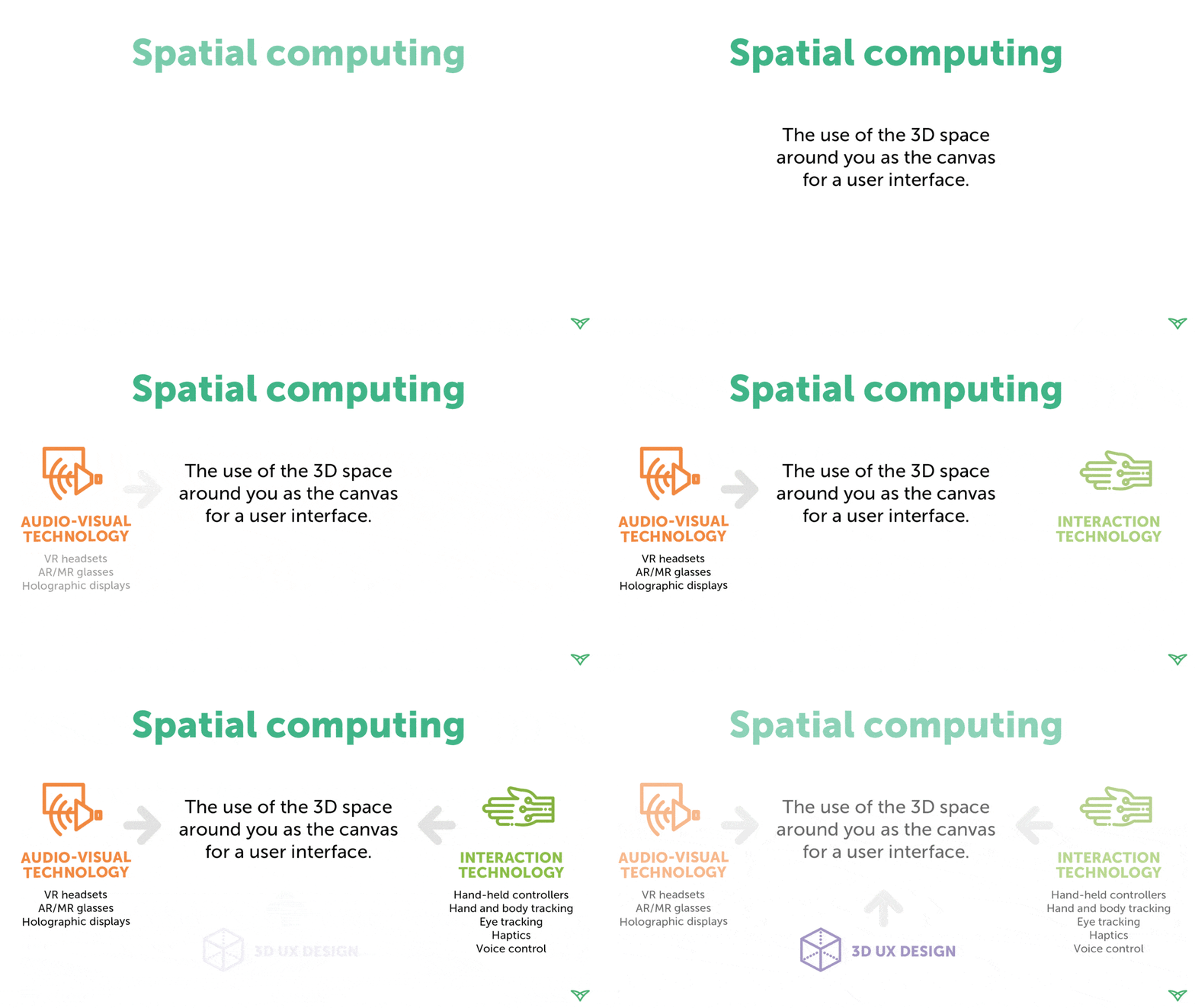
Let's understand the term spatial computing. As per Techslang, Spatial computing refers to the process of using digital technology to make computers interact seamlessly in a three-dimensional world using augmented reality (AR), virtual reality (VR), and mixed reality (MR). Spatial computing uses physical space to send input and receive output from a computer.

The video from DELL EMC WORLD CUSTOMER STORY. NIKE: VISION FOR THE FUTURE OF DESIGN makes the understanding very clear. 


So let's understand this through the world of education.  For starters, it enables all school processes to become streamlined, efficient, and time-saving thereby improving the quality of work. 

In the case of learning, it offers experiential, interactive, and engaging learning interaction between students and teachers. 

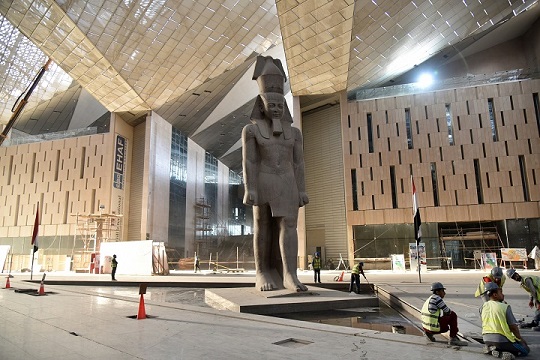
Let us study through an example: The students are studying Egyptian civilization and wish to see a collection of artifacts, mummies, coffins, stones, ancient belongings, and even food types that used to be buried with the kings before death to use in the afterlife. We connect with the Egyptian Museum in Cairo as they have connected all their artifacts to spatial computing. 


The app allows multiple students and teachers to view a 3D model of a historical object from anywhere in the world and in real-time when they are using an XR [Extended Reality] headset which shifts effectively between VR and AR – ideally encompassing MR [Mixed Reality] as well. So, they created a single 3D rendering of the artifact in photorealistic form. This true-to-life replica could then be exhibited in a joint-viewing area and examined remotely by anyone, from anywhere.

The museum curator can present the digital twin of the artifact to multiple students at one time. Students seated at home can highlight, enlarge objects, examine the artifact, ask questions to the curator and also ask peer-to-peer questions. They can even walk around the artifact. 

Take another case of students conducting experiments, mixing Hydrogen and Sulphur, and seeing the production of hydrogen sulphide and being able to smell the rotten eggs odour. It allows students to experiment with the materials, measurements and note down observations and arrive at conclusions based on evidence. Similarly studying a heart in 3D. Now, would one really need a laboratory?


In Literature, it allows the stories or movie discussions to come alive and students actually witnessing the stories and discussing the characters in real-time with other educators or peers across the world. 


In Geography, if you are studying Sahara Desert, you are actually there feeling the heat, the smell of the dessert, the texture of the sand. You actually watch t
he gerbil, jerboa, Cape hare, desert hedgehog, Barbary Sheep, scimitar horned oryx moving about in real time from the comfort of your own homes or classrooms anchoring your body into the experience. Similarly getting an undersea experience. Isn't that exciting? If you are wondering when this is going to happen then do note the XR glasses are still in the R & D phase but very much around the corner. 


Education then has taken up a complete transformation and physical spaces have merged with the digital making learning truly immersive. Much obviously, the teacher training will be upmost on the list ensuring that every teacher has adapted themselves to the technology and given the recent COVID 19 scenario and the manner the teachers rose to the occasion, that will be the least concern. 

Further, curriculum developers, textbooks, research book publications, software companies will have to gear up to provide the students with the spatial experience. With all the recent advances, the future does seem optimistic with the world compressed by a single click. 

References:

What is spatial computing: https://www.fieldbit.net/what-is-spatial-computing/

Spatial Computing in Less than 140 Characters (and more) In Gear & Tech - https://www.stambol.com/about/

What is spatial computing: https://www.ultraleap.com/company/news/blog/what-is-spatial-computing/

Transforming education and training with spatial computing: https://www.magicleap.com/en-us/news/news/transforming-education-and-training-with-spatial-computing

Vision Comic Book : https://spatialtoolbox.vuforia.com/SpatialComputing.pdf

Introduction to XR: https://www.coursera.org/lecture/xr-introduction/spatial-computing-6cz3a?utm_source=link&utm_medium=page_share&utm_content=vlp&utm_campaign=top_button

https://www.google.com/url?sa=i&url=https%3A%2F%2Fwww.magicleap.com%2Fnews%2Fop-ed%2Fspatial-computing-an-overview-for-our-techie-friends&psig=AOvVaw0Ep_EpfFds4UpsahQxk1wm&ust=1607754058553000&source=images&cd=vfe&ved=0CAIQjRxqFwoTCLCCyeKkxe0CFQAAAAAdAAAAABBL