Tuesday, 10 February 2026

Building Equity in STEM Classrooms


Science, Technology, Engineering and Mathematics (STEM) education is widely recognized as a cornerstone of economic growth, innovation and social development. Yet, across many education systems, girls remain underrepresented in STEM subjects and careers. As per digital feminist platform FeminisminIndia (May 23, 2025), in areas like data and AI, women make up roughly 26% of professionals, and in engineering and cloud computing, the share drops to around 15% and 12%, respectively. According to a January 2026 update from UNESCO, women comprise only 35% of STEM graduates worldwide, and this proportion has remained largely unchanged over the past decade, highlighting the persistent gender gap in STEM education and careers. According to the World Economic Forum, women made up only 28.2% of the STEM global workforce in 2024. These statistics compel us to ask three very important questions. 

  1. Why are women not taking up STEM education and pursuing STEM careers?

  2. How proficient is our education system in promoting girls in STEM?

  3. What proportion of the nation’s GDP is spent on enhancing STEM education? 


As a STEM trainer working with educators across the globe, I have observed a significant mindset-related challenge: STEM education is often perceived as being outside teachers’ primary scope of responsibility and is therefore entrusted to external providers. While this approach offers students valuable exposure to STEM concepts, it is separated from classroom instruction, leading to limited teacher involvement and accountability for student learning outcomes. Schools should invest in STEM training for teachers, equipping them with resources and supporting them in curriculum mapping. Also, consistent baseline and endline skill-based assessments measuring critical thinking, problem solving, digital literacy, data literacy, creativity and more, should be undertaken to check students' learning progress. 


Another common challenge is that teachers often equate robotics and coding with STEM education. While these are important, they represent only a subset of a much broader framework. In reality, STEM is embedded in everyday life. Take a simple, daily-use item like a toothbrush. The science of it lies in selecting materials that are safe, durable and hygienic, such as plastics, nylon or bamboo, and in understanding tooth structure, gum health and plaque formation to inform effective design. The concept of friction enables plaque removal without damaging enamel. The Technology may be as simple as a manual toothbrush or as advanced as an electric toothbrush with sonic technology, eco-friendly bristles, motors, pressure sensors, and rechargeable batteries. Some modern toothbrushes even incorporate Bluetooth connectivity, mobile applications, and AI-driven feedback to track and improve brushing habits. The engineering is evident in the ergonomic handle design for comfort and control, and the bristle movement and head flexibility to reach all tooth surfaces effectively. Mathematics underpins the precise measurement and arrangement of bristles, such as length, spacing, angles, and orientation, as well as the analysis of brushing effectiveness, wear rates, and user behaviour patterns. This illustrates how STEM is not confined to specialised tools or activities; it is everywhere. If we integrate everyday phenomena, activities, or products into classroom learning, wouldn’t students warm up more to STEM education? 


In STEM training for tribal teachers, the KEF team discovered how they use STEM on a day-to-day basis without realising it. Residing in rural areas, surrounded by flora and fauna, they face hardships in their daily routine and use critical thinking to resolve small issues. For example, to cross small streams, they build low-cost modular footbridges made from bamboo/wooden planks/recycled materials, anchored with ropes and stabilised with rocks. Thus, they are choosing materials that resist water damage, using levers (crowbars), pulleys/ropes, basic drilling or lashing techniques, estimating materials needed and total cost. They are also measuring stream width, plank spacing, height of bridge above water, height of handrail. They regularly apply STEM principles but are unaware of it. 

Another challenge in India is the narrow perception of STEM careers - largely framed around engineering and medicine, despite the vast and growing range of STEM professions available today. Far fewer students are encouraged to consider emerging and interdisciplinary careers such as marine biologist, environmental scientist, geologist, cartographer, transportation planner, information security or cybersecurity analyst, actuary, data scientist or analyst, AI and machine learning specialist, cloud architect or administrator, renewable energy technician (solar or wind), virtual or augmented reality architect, and user interface (UI/UX) designer. Broadening awareness about these opportunities is essential if students are to envision STEM as a diverse, future-ready career ecosystem. 


To augment this thinking, representation within the curriculum also matters. Textbooks, classroom examples and assessment tasks that highlight STEM careers, contributions of women scientists, engineers and technologists, along with male role models, will help counter stereotypes and expand students’ sense of what is possible. As per Insights IAS (December 2025), India’s Gross Expenditure on R&D (GERD) is stagnant at ~0.64% of GDP, compared to the global average of ~1.8% and China’s 2.4%. When governments actively support STEM education and promote girls’ participation in STEM, systemic change can occur through sustained investment in research and school infrastructure, gender-responsive education policies, curriculum reforms that integrate real-world and interdisciplinary STEM learning, and large-scale teacher professional development. Targeted scholarships, mentorship programs, early exposure initiatives and partnerships between schools, industry and research institutions could further expand access and aspiration for girls. Equally important is the development of national strategies that embed digital literacy, AI education and ethical technology use across schooling, ensuring that girls are not only consumers of technology but future innovators and leaders in STEM fields. 


Said astrophysicist and science communicator, Neil deGrasse Tyson - “Science literacy is the artery through which the solutions of tomorrow’s problems flow.”


References


  1. Society of Women Engineers. (2025). Global STEM Workplace. SWE. https://swe.org/research/2025/global-stem-workplace/

  2. Sanduja, J. (2025, May 23). The 35% problem: Unpacking gender gaps in STEM through the UNESCO GEM report. Feminism in India. https://feminisminindia.com/2025/05/23/the-35-problem-unpacking-gender-gaps-in-stem-through-the-unesco-gem-report3. Insights Editor. (2025, December 9). India’s STEM future. InsightsIAS. https://www.insightsonindia.com/2025/12/09/indias-stem-future/

Wednesday, 12 February 2025

From Classroom to Cafeteria: Fun with STEM and Food Authenticity

Have you ever questioned the authenticity of the food on your table? Have you ever experimented with your ingredients to check their purity? In my STEAM-based Global Outlook (G.O) subject, I designed a lesson plan for Grade VII to test basic commodities we consume every day, like milk, honey, salt, turmeric, and pepper, and determine their authenticity.

The aim of this lesson was to:

  1. Research methodologies to assess the originality of the product.
  2. Determine the authenticity of the commodity through experimentation.
  3. Spread awareness to determine the originality of the product in the local community.

As usual, I briefed my team of G.O. teachers on the lesson plan and left it in their capable hands to execute it. Observing the class conducted by my teachers reinforced my belief that a great teacher has the power to inspire students.


The teachers collaborated among themselves, 
shared the lesson objectives, got students to research more on the commodities of daily use, allocated resources for the methodology of testing. They booked the entire cafeteria for this activity and divided the students into groups. On the final day, around 240 students were taken to the cafeteria at one time. to ensure the experiments were executed simultaneously.  The students were aware of their table space and simply readied their materials. Teachers took charge of three tables at a time to facilitate the learning.

The lead teacher had the microphone and guided students to navigate from one test to another. The students noted down their observations after discussions with the groups. The canteen was bustling as students were deeply engaged in discussions and experiments, their focus entirely on the tasks allocated to them. They had looks of awe and wonder, and as a Head Teacher, I never felt this level of satisfaction. Seeing students display a joy for research, experiments, and exploration, and including each other in the discussion, tells us that we are on the right path.

   Students testing authenticity of pepper seeds. If it floats, it is impure and basically papaya seeds. 


Students testing authenticity of honey. 

I personally went from table to table, asking about their results and whether they were enjoying the experience. Every table had students informing me that they were having fun and that they would inform their parents of these results so they could buy more authentic food.

STEM is truly everywhere; we just need to get students to look around and connect the concepts they learn in class to day-to-day phenomena and activities, and voila, their interest will grow.

From experience, designing a lesson plan and seeing it come to life are two different experiences. Sometimes the best lessons fail because the planner and the executor are not on the same page. However, a combination of a well-crafted lesson plan and robust delivery by experienced teachers can raise the standard of learning outcomes and take it to another level completely. I am completely grateful to my amazing team of teachers who have given wings to my subject.

I have attached my lesson plan for your use and test for food authenticity. Do share your class experience. 

Lesson Plan on  Determining food authenticity


Saturday, 11 January 2025

Bumper to Bumper: Psychological Shift from Calm to Chaos

I have been driving these past few days, and I have observed myself swearing and getting frustrated. I enjoy driving but this behaviour of mine is new to me. I've been driving on the same road for the past seven years and it used to take a maximum of 15 minutes. However, due to metro construction work since 2019,  the driving time has stretched from 15 minutes to 45 minutes, and sometimes even up to an hour. I've tried many detours using small narrow lanes, but if I was successful once, the second time, I got badly stuck. I also tried the train but the station is far from both home and school, and it's only a one-stop ride so it doesn't help much. 

How has it affected my psyche over time? I dread taking my vehicle out while returning from school. I mentally prepare myself to spend at least 30 minutes on the road, going bumper to bumper. I know that if I blink for a second, another vehicle is going to grab my space, so I have to stay alert every second. 


Last month, I was in Tirupati and we hired a driver to take us from Chennai to Tirumala. He was driving smoothly but I felt he wasn't speeding when the road was empty. Being used to bumper-to-bumper driving, I shared my thoughts and he took it very personally. In retrospect, I realized he was right; there was no need to rush as we were on time but the past experiences had made me impatient. 


What about my observations on the road over the past few years? It's alarming to see people breaking every single rule during the drive. Just yesterday, I was waiting at the signal, a rickshaw rode beside me going half on the footpath and half on the road scratching my vehicle, and running away gleefully. What made it worse was a bunch of bikers enjoying that moment and mocking me. I honestly did not know what to make of this experience. Should I feel aghast that hitting people's cars to make space for oneself is celebrated or feel humiliated that people who rode by made eye contact with me and laughed at my expense? 

Another keen observation is people driving from the opposite side, expecting you to make way for their cars, especially when they know they are in the wrong. This complete disregard for rules and protocol highlights a character who only wishes to serve himself with no regard for others. 

Over the years we have become so self-centered, using our vehicles to fulfill our needs and demands without caring for others. This is a cause of concern because a majority of the vehicles are driven by educated and qualified people. If they are exhibiting signs of self-centredness, disregard for rules, and 'I' over 'We' mentality then you can imagine where we are taking the nation. 

My sincere request to the government and road officials is to please not dig up all roads at once. The impact is not just on the driving time but also on the fabric of society, where people justify their roles and unfair acts simply because they wish to be in a particular place at a particular time. 

In my previous blog, I highlighted the need for bridging the gap between education and culture, and even today, I urge you all to do the same. We are a population of 1.4 billion with 24% in the age bracket of 0 to 14 years. There is huge potential for change if we all come together - Government, Educational institutions, boards, teachers, parents, and students, - and hold values above academics.  

Do share your personal experience and your journey. 

Monday, 9 December 2024

"From Education to Culture: Bridging the Gap"

I recently attended a conference and heard a retired Supreme Court judge mention in his speech that the number of criminal, cybercrime, and domestic violence cases has increased, and the majority of them are committed by educated people. Yes, educated people, but not cultured people. We are not promoting culture within our organizations and that is more paramount. That statement hit me hard. I checked the statistics with the article from Business Standard. The significant escalation in reported cases is evident from 2019 to 2024, with 26,049 complaints recorded in 2019, 257,777 in 2020, 452,414 in 2021, 966,790 in 2022, 1,556,218 in 2023, and 740,957 in the first four months of 2024 alone. 

That very evening, I was catching a flight back home. While boarding, the staff announced the zones for people to queue up. My zone was announced first, and while we were in line, the staff announced that the next zone could join the boarding line. To my dismay, well-dressed people just jumped the line and pushed towards the gate. I simply could not fathom the behavior as it was obvious they could see that we were already in line. I did try to talk to them but the effort could have been more successful. Moreover, didn't they realize that the flight wouldn't leave without taking every passenger?

The judge's line resonated even more: "Most people are educated but not cultured." As an educator, I meet people around the clock. My work deals with human emotions. Over the years, I have observed a shift. Most people want an instant response when they send an email or want a document stamped. They send messages at odd hours and expect immediate action. They are also quick to believe everything they hear without even once confirming it with the other side.


Recently, a parent couple came barging into the office asking for me. I was busy watching the annual day practice, so my office staff asked them to wait. They immediately started screaming and ranting that it was meeting time, so I should be available. The next thing they asked for was the class teacher, who was busy in class. While they were waiting, they caught the teacher moving from one class to another and spoke agitatedly. In the meantime, I walked back into my cabin and asked for the parents who were creating a ruckus. The parents entered very aggressively and introduced themselves as people in very high positions and so on. Their concern was that their child was unhappy because they believed a few students were bullying him and the other students should be given some value education classes. We called for the teacher.  

Now hear her version: the child has many friends. The previous week, the child had a fight with a friend and thus did not want to come to school. The child has now made up with the friend and is smiling. So, the child simply gave an excuse. After this interaction, I made sure that the parents realized their actions and what kind of role models they were becoming for their children. They came angry but left laughing at their outburst. The concern here is having only one child and pampering them so much that now it has become difficult for us to watch them cry.

Our students left for educational excursions this week, and Std. III students left for Pune by bus. On the main road, the bus honked at a scooter many times to move from right to left as it wanted to pick up speed. The lady on the scooter got so angry that she came in front of the bus and refused to move until the driver came down and she could slap him. The teachers folded their hands and requested the lady to let the bus move as there were 40 children around age 8. She refused to understand, and finally, after two hours, the police had to be called in, and then the bus got permission to move. Seriously, I have yet to comprehend this conduct. What did she gain from this entire incident? An apology was already rendered; why was there a need to get physical? Once again, educated but not cultured.

Shouting and screaming give you no results; in fact, they take away from your cultured behavior. Additionally, you have already fallen low in front of the people you are addressing. Message to note, 'Your power does not come from your position but from your humility'.


On the other hand, I have seen ordinary people command respect simply through their presence because they foster a culture of peace and love. They inspire others to view life with meaning and treat one another with kindness and respect. My sincere request to all institutions and organizations is to prioritize a culture of respect over money and status. Invest in building this culture and bridge the gap, as the memories of how you make others feel will endure far longer than your physical presence.


References: 

1. Singh, R. (2024, May 27). Here is how much Indians lost to cyber frauds between Jan and Apr of 2024. Business Standard. Retrieved from https://www.business-standard.com/india-news/here-is-how-much-indians-lost-to-cyber-frauds-between-jan-and-apr-of-2024-124052700151_1.html


Monday, 5 August 2024

Build your STEM Competency through AI - Part 1

Open any search engine or social media tool, and you'll find AI popping up everywhere. It's tempting to explore it, but there's also a sense of apprehension about the unknown. As a Physics teacher, it reminds me of Lenz's Law, which states that the direction of induced current in a conductor by a changing magnetic field is such that the induced current opposes the change in the initial magnetic field. Simply put, when AI gets close, you may want to distance yourself, but when it's far away, curiosity draws you back in.  

The big question on every educator's mind is how?  Let me start with my humble beginning simply by navigating the net and attending a few webinars. 


The OECD webinar, 'How teachers can use AI effectively' shared some good insights. My friend, Vineeta Garg showed great MS Teams tools under assignments like learning accelerators for reading progress, speaker progress, and search progress to enhance class experiences. Do explore it and hope it supports language learning within your classrooms. 


It is my exploration that revealed to me the magic of AI. 

1. Presentations - I stumbled upon the app, 'gamma ai' and to have it create a presentation for me within minutes was phenomenal. Moreover, it is free and you can create 5 presentations. You can upload your own PPT and get it modified. You can even create websites or documents. You can increase the number of presentations by referral. The link to the app is gamma.app  Initially, I felt like a child playing with it, discovering what more it could do for me. I've shared a small video below, but believe me, the potential is even greater. 


2. Classroom content and assessments - The next AI tool an educator, truly enjoyed is MagicSchool AI. It offers a free version for 15 days and then you need to pay but the benefits are enormous. Create lesson plans on 5E's, create assessments, create rubrics, create questions related to real life in Math, simulate science experiments, address misconceptions, and even access a free course to guide you. My video below will demonstrate the vast benefits. 


3. Video generator - The next app is Pictory AI and it can create a video for your class from scripts, from articles, and also help you edit recorded videos. Many of my colleagues have created videos on the workings of a roller coaster to show the laws of physics. Why don't you dabble in and create some exciting videos for your class? 


I recently conducted a teacher training session at my school, bringing together educators from across the city to share insights on AI integration. The response was overwhelmingly positive. This enthusiasm signals a future where we will cultivate a group of teachers proficient in balancing AI tools with social-emotional learning (SEL). This blend will ensure that education becomes truly inclusive and impactful for all students.


A word of caution: AI can create content and visuals, but it may not always be 100% accurate. As the expert, it's crucial to verify the content yourself. Use AI to help you reduce the effort spent on routine tasks, allowing you to focus more on supporting your students' social-emotional learning (SEL) and achieving their learning goals.

Additionally, be aware that AI-generated images often portray people as attractive and slim, which does not reflect the diversity of the real world. Addressing this bias in your classes is important.

In our next blog, we will explore more AI tools that can help alleviate your workload.


Friday, 1 March 2024

"Navigating Teenage Turbulence: A Parent's Guide to Overcoming Challenges and Building Stronger Bonds"

Consider the scenario in a school. It is an Open House for senior secondary students, and Raj has not performed well in his academics. His assignments are never on time and he idles away his time on his mobile. The parents are called along with the students and requested to ensure their wards are consistently studying. The response you expect is 'YES, we will ensure' but the response you receive is 'Raj does not listen to us, please look into the matter'. 
There is a helplessness expressed by the parents that is so palpable. 

Similarly, when you talk to educators or people in the community, they all voice the same concerns. In the past decade or so, the parents did show some control but over the years, there has been a struggle to cope. How did we arrive here? 

Now let's visit a regular family with young children or a single child in most cases. The child, let's call him Raj is the center of their parent's affection. Both parents are highly protective of Raj and thus everyone else is excluded from ever disciplining the child because they have taken complete responsibility and shielded their ward. So, when the child is sent to school or classes any minor inconvenience becomes a squabble with the authorities. Every attempt to address behaviour or attitude is reviewed as denial or targeting. Eventually, every party involved lays down any claim as peace is preferred. Over a period, everyone begins to accept this behaviour of the parents too because the ward belongs to the parents and they have the best interests of the child in mind.  

Now perceive this from the child's angle. Raj observes that he matters immensely to his parents, he follows his parents and anyone else who claims otherwise is not to be heard. His world has narrowed down to his parents and himself. So, when his teachers say something, the neighbors complain, and the elderly advise he might acknowledge it but he will look to his parents only for confirmation. 

Fast forward by a few years, the parents observe that Raj is spending more time with his friends, he demands electronic gadgets and gets very upset with them when it is not offered. There is a lot of emotional drama when he is denied anything or asked to study. The parents find it very difficult to handle Raj because where he kept them at the centre of everything now they are completely sidelined. His desires and pleasures are all that matter to him. He has begun to care only about himself. 

In fact, the article,  'The Teen Brain Tunes in Less to Mom's Voice, more to Unfamiliar Voices' published on  - By Erin Digitale resonates with this behaviour “Just as an infant knows to tune into her mother’s voice, an adolescent knows to tune into novel voices,” said lead study author Daniel Abrams, PhD, clinical associate professor of psychiatry and behavioral sciences. “As a teen, you don’t know you’re doing this. You’re just being you: You’ve got your friends and new companions and you want to spend time with them. Your mind is increasingly sensitive to and attracted to these unfamiliar voices.”

Perceive it from Raj's end. Raj now has friends, he has access to technology, he is consistently on his mobile and social network and confident that his behaviour and attitude are acceptable. His parents have endorsed it. As he grows, he is exploring more and perhaps driven more by hormonal changes. He now perceives his parents as friends rather than an authority and does not appreciate interference. He believes he knows what he has to do. 


Today the parents are helpless, and isolated and look up to everyone for support but Raj has already realized that the support team is something he does not need to heed. 
How do we help him reflect on himself when he feels he has done nothing wrong? How do we get him to trust an outsider's advice? 

Here's my view on the issue. 

1. Begin with Positive disciplinePositive Discipline is a program developed by Dr. Jane Nelsen. It is based on the work of Alfred Adler and Rudolf Dreikurs and designed to teach young people to become responsible, respectful and resourceful members of their communities. Positive Discipline teaches important social and life skills in a manner that is deeply respectful and encouraging for both children and adults (including parentsteachers, childcare providers, youth workers, and others). 
One way of instilling it is having your ward intern with NGOs, NPOs, and social welfare departments. The sensitivity inculcated through the case studies is phenomenal. Moreover, it will teach him rigour and resilience. 


2. Modeling of behaviour Modeling is one way in which behavior is learned. When a person observes the behavior of another and then imitates that behavior, he or she is modeling the behavior. This is sometimes known as observational learning or social learning.
To help Raj, parents need to show Raj that they respect the school policies, and the advice of the grandparents and well-wishers. Only when they start believing and expressing positive thoughts, will the child model it. 

3. Bring in Holistic education - As parents, the focus is more on marks than behaviour and that is where we all go wrong. We have given intellectual quotient so much importance that the other quotients have been negated. My friend Swaroop Rawal talks of six quotients in her YouTube video on 'Holistic Education & the ‘whole’ child'. She stresses AQ and SQ also called the 'Dharmic quotient' to support value education. Every religion teaches harmony, respect for elders and compassion so read some good stories. As parents, we should emphasize school and community celebrating a student's proficiency and talent apart from academic achievement. This mindset shift is mandatory to create a generation of students who care for others, the environment, and themselves. 


4. Seek professional support - Schools have counselors who can observe the child at school and collaborate with parents to offer the right counsel. Parents can also connect with psychologists outside the school premises if they need further support. 

I believe in 'OUR STUDENTS' profusely and have faith in them.

As an educator, I have observed over the years that students today are much more intellectual, committed, and caring in the right environment.  All they need is a nudge in the right direction from us working as a team, and a commitment to balance their time between gadgets, social media, and OTT and building all their 6 quotients as mentioned in the image. 

इन्द्रियाणि पराण्याहुरिन्द्रियेभ्यः परं मनः।
मनसस्तु परा बुद्धिर्यो बुद्धेः परतस्तु सः॥ ३-४२

The senses are superior to the gross body, and superior to the senses is the mind.
Beyond the mind is the intellect, and even beyond the intellect is the soul.

THE SOUL REIGNS SUPREME

Friday, 27 October 2023

Lessons from the past - Chola Dynasty

Like every second person, I love movies. Whenever I begin watching them, I am so immersed that my family often complains that my attention towards the movie is so undivided that I do not listen to anything they say or mention. Recently, I watched Ponniyan Selvan and I was hooked. The plot, the twists, the cinematography, and the costumes took me back to that era. The way it was directed, presented, and enacted by the actors was another highlight and I eagerly watched the second part. Moreover, it drove me to learn more about the Chola Dynasty. 

Let me share that I was intrigued by the history shown in the movie but not everything shown in the movie is true. 

Source:https://m.media-amazon.com/images/S/pv-target-images/7e25f103214ea7116adf106e3762b591a2b46469377bc310b5983dbeb623a0f4.jpg

So let's explore what we can take from the empire and use it in present-day life. The Cholas ruled from the 9th to the 12th century AD. If you refer to the book, Ancient India by S. Krishnaswami Aiyangar, Cornell University Library, you learn how the kingdom came to be. 

It was King Rajaraja who ascended the throne in 969 A.D. conquered territories and became master of the Tamil country south of the Pennar. He was so devoted to his work that he did not let a single opportunity pass by him to ascertain power and defeat the Chalukyas. His son, Rajendra took over after him and expanded the empire and successive rulers maintained the glory.  They were excellent at maritime knowledge and capitalized on their supremacy over the seas making them formidable at sea wars. 

The strength of the kingdom was its governance. The administration was highly systematized from an early date. The Head of the state was the king with state officials and ministers as shown in the image. 


For administration purposes, the kingdom was divided into several administrative units called 'mandals' with respective sects of people governing the areas. Different sects of people governed different areas to bring in more regulations. What was most appreciable was that the village councils, 'sabhas' enjoyed autonomy with minimal interference from the king. Further, the courts to impart justice gave out judgments based on evidence. 

This is somewhat comparable to our present democratic government across the world. So why was the governance lauded to date and celebrated even today?  Why do we seek to make movies of the past when the countries today have systems with the latest technology and access to resources? 


If you analyze the information shared, two prominent conclusions can be drawn:

1. Process hierarchy - All the officials were governed by another set of officials and the guidelines were clear where they abided by the rules of the constitution. Training and monitoring play an important role in every system within the governing bodies so that each individual is aware of their roles, their outreach, and the scope and boundary of their powers. Institutions should invest in consistent training and third-party monitoring to get real-time feedback on their performance. 

2. Autonomy and minimal interference - You need to trust the person you have engaged for the role and allow them to experiment and explore. You need to give them a boundary where few errors can be accepted and where no mistakes will be tolerated. For example where the life of any individual is threatened then no lapses will be entertained but an event arrangement lacking coordination or quality can be let off with guidelines and feedback. Allow the person to make decisions and learn from the consequences without a feeling of guilt and remorse as David Ogilvy mentions, "Leaders grasp nettles"

We observe micromanaging by the Heads at many institutions and it does not allow leadership to flourish. In fact most parts of the world, we are experiencing a serious lack of strong leadership role models and we observe people in old age still leading countries. Why do we not see the dynamic youth leading from the front? 

This is a serious concern and the Ministry of Education and educational institutions need to take cognizance. For starters, educators need to create projects for students where they share their leadership icon of today stating the attributes that make the person a great leader and comparing it with a leader of the past. Let the students role-play, criticize, or even rewrite what they felt the leader should have done better. Get students to create portfolios where they conduct research on how to create leaders for the nation with a 10-year plan.   

While closing, I would want to share that movies can be a starting cause but how we use it is all our perspective. I am happy to learn about the Cholas which I never did take seriously during my school days so kudos to the entire movie team. At the same time, post the research, the students could also be asked to review the movie and analyze the facts and the fiction. 


References:

1. Unveiling the Lost Pages of History: The Forgotten Cholas and Other Indian Dynasties......

Read more at: https://organiser.org/2023/06/12/178492/bharat/unveiling-the-lost-pages-of-history-the-forgotten-cholas-and-other-indian-dynasties/

2. Ancient India - https://www.rarebooksocietyofindia.org/book_archive/196174216674_10154712353641675.pdf


Sunday, 9 July 2023

We all need a Mentor in life

We walk on our path and there comes a time when we don't know where to look further. There are crossroads at times, obstacles looming over us and sometimes our own insecurities gnawing at us making us stand still. At that time, imagine an experienced, loving individual knowing our strengths and shortcomings walking toward us, holding our hand, and showing us the path ahead. Sounds awesome, doesn't it? Well, that person is our mentor. A mentor who believes in us invests time in us and with their vast background of knowledge shows numerous possibilities to rise. The rise may not always be professional but also personal. 

In 1997, I was going through a bitter divorce and times were tough. My parents were extremely supportive but the barrage of relatives throwing negative remarks was draining us of all hopes and peace. It was not allowing me to think of any kind of future. I felt I was sinking into a hole with no light at the end of the tunnel. I had lost confidence and began doubting myself. Suddenly my friends were no more inviting me, and my presence was not a requisite. At that time, my father called his sister, my beautiful aunt from Kolkatta known for her affable nature and immense positivity to come to Mumbai to take me to her place. She felt a change of place would do me good. Every day, she would share positive things about me like 'You are so intelligent, you can be anything; 'You are much stronger than you think you are; 'You have sharp features, anyone will love your looks'. Her ever-smiling face, seeing the good in people, and her belief that everything happens for a reason started rubbing off on me. 

Consistently, over two months, her words and actions started doing magic with me, I developed an inner strength to face the world with my head held high. I came back to Mumbai, started my studies again, and joined teaching as a profession. With every step, my confidence grew and I started experimenting and exploring moving to leadership positions and teacher training.  Today with my soulmate married for over 22 years and a loving son, achieving a National Award for teachers, I know there is more to come. My relationship with my aunt is ever so strong and sharing a recent photograph where she is beaming with love. 

Over the course of the years, many mentors walked in shaping my professional growth like Usha Bhatia Ma'am, Seema Sheikh Ma'am, and Sangeeta Gole to whom I will always be grateful. 


History has shown that every great thought leader, businessman, and scientist had mentors who inspired them to become the best version of themselves. How can anyone forget Lord Krishna being the ideal mentor in Arjuna's life helping him reflect on his actions and resolve deep-rooted fears, and belief systems, and take control of himself. In the battle of Kurukshetra, he showed the mirror to Arjuna, the best warrior,  saddled with conflicts preventing him from action and delivering. 

Take another example of Oprah Winfrey and Maya Angelou. 

Excerpts from Oprah.com

The woman Oprah calls mentor-mother-sister-friend offers wise words about the roots of confidence, the trouble with modesty and how to do the impossible. Since the moment I opened I Know Why the Caged Bird Sings, I've felt deeply connected to Maya Angelou. With each page, her life seemed to mirror mine: In her early years she was raised by her grandmother in the South; as a young girl she was raped; and, like me, she grew up reciting what the church folks called little pieces—a few lines from the Bible that were usually delivered amid shouts and amens from the women fanning themselves in the front pews. Meeting Maya on those pages was like meeting myself in full. For the first time, as a young black girl, my experience was validated. And it still is, only now I sit at Maya's feet, beside her fireplace, hardly believing that, years after reading Caged Bird, she is my mentor and close friend. When we met in Baltimore more than 20 years ago, our bond was immediate. We talked as if we had known each other our entire lives; and throughout my twenties and in the years beyond, Maya brought clarity to my life lessons. Now we have what I call a mother-sister-friend relationship. She's the woman who can share my triumphs, chide me with hard truth and soothe me with words of comfort when I call her in my deepest pain.
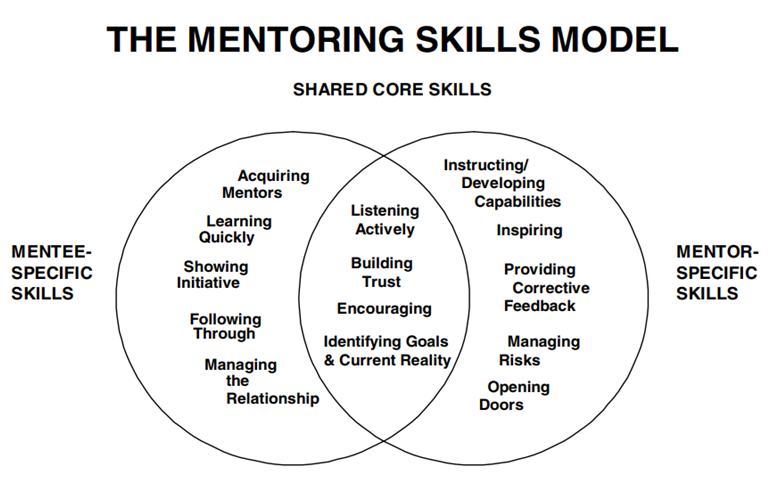
The next question is obviously, how do I find this mentor? The Mentoring skills model given below helps us to identify the skills a mentor should have. It explains the skills both the mentors and mentees should display to achieve the maximum from a relationship. 
 

Do mentors walk that easily in life? Well yes and no. Yes, you will have to look and look hard. Sometimes, they are there in front of our eyes, but our busy schedules have prevented us from looking around or even focusing on building our future. 
No, when we feel we already know everything. Sometimes our egos blind us into believing we are already the best or we are too insecure to share that we need guidance. All I can say is that if I am growing, it is because I had great teachers and significant mentors. 


Wednesday, 25 January 2023

Poem - Cars driving on a highway

Ever wondered how cars moving on a highway are similar to people👭 walking into your life?


Some drive alongside you peacefully for ages;

Some drive past you without a second glance;

Some respectfully 🙏 let you overtake, valuing your speed ⛷️;

Some annoyingly get into your way for a dumb thrill ;

Some zig-zag undeniably to reach their destination while

Some create tantrums and traffic ⛔and slow you down.

Some out of spite  😡and inner insecurities break all rules;

While some follow the rules so soundly to create a safe haven.🏵️🏵️
Whether the journey is for a moment or a lifetime, it definitely leaves a mark. 

Tuesday, 29 March 2022

GLEAM Model of learning -Learnit Conference

In March 2022, I had the opportunity to attend the Learnit Conference, a vibrant gathering of educators, innovators, and thought leaders from around the world. The experience was both enriching and energizing, offering deep insights into emerging pedagogies and meaningful opportunities to connect with fellow educators. One session that particularly resonated with me introduced the GLEAM Model, a powerful framework designed to promote equity and excellence in the classroom through game-based learning. This blog captures my reflections on that session and explores how its ideas can be translated into everyday teaching practice.


GLEAM, a model rooted in equity and excellence, was brought to life through the familiar framework of Monopoly. Far more than a creative twist, GLEAM is a deeply intentional approach that reimagines classroom dynamics by making learning strategic, inclusive, and emotionally resonant. It bridges the often-unseen gulf between educators and students, transforming abstract curriculum goals into relatable, game-based experiences.

Viewing GLEAM through my learning lens, I see a model that empowers teachers to differentiate instruction, affirm student identities, and embed real-world relevance into every concept. It’s not just about playing a game; it’s about designing learning that is meaningful, measurable, and motivating for every learner in the room.


I am sure everyone reading the blog has played the game of Monopoly, wherein the player's role is to remain financially solvent while forcing opponents into bankruptcy by buying and developing pieces of property.  How do we use it in the classroom to ensure that teaching and learning for every level of student is supported?

💭1. Imagine students playing Monopoly to explore concepts in Mathematics, English, communication, economics, and history. Beginners can start by trading money and researching the historical significance of the streets on the board. As they progress, they develop strategies to build their empires, acquiring a wide range of skills along the way.

Now, reimagine the game:

  • Replace the original streets with ones from your own city and have students present their unique histories.
  • Substitute or replace the roads with parts of speech, each property representing adjectives, adverbs, prepositions, conjunctions, and more. As students land on them, they complete challenges, craft sentences, or identify usage in context.” 

This approach transforms Monopoly into a dynamic, interdisciplinary learning tool that grows with your students.

Slowly and steadily, you have involved all levels of students, irrespective of academic, social, racial, and gender differences, and shared a common platform to increase levels of learning. Couldn't this activity be part of your projects or assignments?

🎯 2. Engaging Instruction: Differentiation with a Game-Based Mindset

An effective educator understands the diverse backgrounds, learning profiles, and classroom dynamics of their students. They are deeply familiar with the curriculum and intentionally design environments where rigor is embedded in the standards. Crucially, they ensure that every learner’s progress is tracked and supported.

Let’s explore this through a classroom scenario:

Example: Differentiated Physics Instruction
As a Physics teacher, introducing the concept of electromagnetic induction is often perceived as challenging. I recognize the varied readiness levels in my class of 40 students. I anticipate that:

  • 5 students will grasp the concept quickly,
  • 20 will struggle to understand it,
  • And 15 may disengage entirely.

To address this, I implement a Station Rotation Blended Learning model. All students begin by conducting a hands-on experiment to explore the phenomenon. This shared experience ensures that at least half the class attains a foundational understanding. Based on their responses and observed engagement, I then regroup students into three tiers:

  • Experts: ready for extension tasks or peer mentoring
  • Comfortable learners: supported with scaffolded digital/human resources
  • Struggling learners: guided through targeted interventions and simplified research tasks

Each group receives differentiated support, whether through curated content, collaborative inquiry, or teacher-led mini-lessons. The goal is clear: no learner is left behind, and every student moves forward on their learning path.

Example: Gamification through Monopoly
In Monopoly, all players follow the same rules and use the same resources: money, dice, and the board. Yet, each player’s journey is unique. Some rise quickly, others falter, and many hover in between. But with each turn, players gain experience, refine their strategies, and improve their decisions.

Similarly, in the classroom, curriculum goals and assessment criteria remain consistent for all, but the pathways to mastery differ. Just as Monopoly rewards adaptive thinking and perseverance, effective instruction honors diverse learning strategies, whether through peer collaboration, digital tools, or inquiry-based tasks. Gamification reminds us that progress is nonlinear, and every move, successful or not, is a step toward deeper understanding.


If you have noticed, I have not used entertainment but focussed on capitalizing resources to build students' intellectual capacity. 

💬 3. Affirming Instruction: Building Identity, Equity, and Encouragement

Affirmation means offering emotional support and encouragement. In every classroom, educators encounter a diverse range of learners—each with unique identities, experiences, and needs. Yet, unconscious biases can creep in, subtly favoring some students over others. The challenge and the opportunity are to ensure that every child feels seen, valued, and empowered to become their best self.

So how do we embed affirmation into our daily instructional practices?

  • We motivate students to build knowledge, skills, and attitudes by creating safe spaces for inquiry, expression, and growth.
  • We nurture empathy and environmental consciousness through real-world connections, collaborative projects, and reflective dialogue.
  • We honor student identities by integrating culturally responsive teaching strategies, adapting content to reflect diverse perspectives, and addressing inequalities through differentiated support and inclusive pedagogy.

The article on culturally responsive teaching offers powerful insights into how instructional practices can affirm student identity while promoting academic excellence. It reminds us that affirmation is not a one-time gesture; it’s a continuous commitment to equity, dignity, and belonging.

🎲 Gamification Analogy: Learning Through Play
In Monopoly or any game, we don’t let players quit midway. We encourage them to stay the course, adapt their strategies, and keep trying. We celebrate their wins, console them in defeat, and remind them that every move builds experience.

Classroom practices can mirror this beautifully.

  • The rules (curriculum and assessment goals) remain consistent, but the pathways to success are flexible.
  • Every student is a player, and every lesson is a move toward mastery.
  • Teachers are the game masters, guiding, encouraging, and adjusting the game so that no one is left behind.

It may sound simple in a game, but replicating this mindset in the classroom is both powerful and possible. And you, dear educators, are the superheroes who make it happen day after day, child after child, with unwavering commitment and heart.

🌍 4. Meaningful Instruction: Connecting Classroom Learning to the Real World

Knowledge gained in the classroom becomes truly powerful only when it connects to the world beyond. Without real-world relevance, information remains abstract and disconnected. To make learning meaningful, educators must ensure that every concept is interlinked, interdisciplinary, and grounded in authentic contexts so that students see the bigger picture and understand its implications.

Example: Real-World Lessons from Monopoly
In Monopoly, the money you use to rent or buy property mirrors real-world financial decisions. If you keep spending without earning, you eventually go bankrupt, a concept that applies directly to personal finance and economic literacy. The game teaches players about risk, investment, budgeting, and strategic planning.

Likewise, classroom learning should reflect this interconnectedness.

  • A math lesson on percentages can link to budgeting.
  • A science unit on energy can connect to sustainability.
  • A history discussion on trade routes can lead to insights into global economics.

When students understand how classroom concepts apply to their lives, communities, and futures, learning becomes not just informative—but transformative.

This model has made me introspect, and I will definitely incorporate this learning model and hope you do too. For further information, please refer to the GLEAM Model of learning

Next time, I look at the board of Monopoly, the vision will be much different from what I was carrying before, and isn't that what learning is all about, 'Learn, Unlearn and Relearn'